
Episode 13
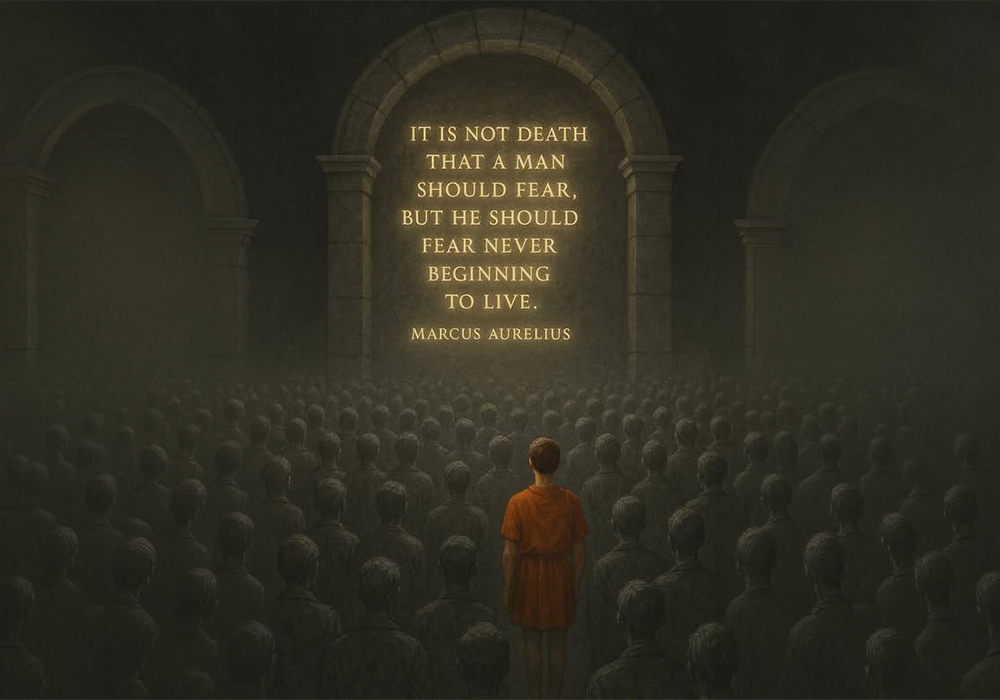
The system, the status quo — the system at that time — was not a new word for me, like many of us already know about the ecosystem, digestive system, etc. But status quo was a new terminology for me. And when you are working with the public sector, you must either be part of that status quo or be out of it. There is nothing in between.
When I started visiting government-sector clients with my bosses, I began learning about the process of approvals and business acquisition. If somehow our work was rejected on the basis of weak creatives and later we would still get the business after the intervention of the bosses, it always made me curious about the unknown ways of getting business. That curiosity was later addressed by our GM in his own style of narration.
He would swing around on his revolving chair, inhale the smoke deeply, and spread it around his room. You would keep standing; then he would ask you to sit, spit some betel quid (paan juice ) , and say,
“You ask too many questions. Just learn one thing: if you want to survive, just be part of the system and do not question.”
My obvious question was: What’s the system?
The answer was: What’s going on shall go on — and that’s the status quo.
Apparently, it was all PR, but the status quo was much deeper than that, which I learned in the following years.
In previous episodes, I have mentioned my father working in ISPR. He worked as a Lower Division Clerk and later as an Upper Division Clerk, and retired as a superintendent. He would speak a lot about his officers, especially the uniformed ones. Not only was government-sector working overheard a lot in my early childhood, but I also visited ISPR many times, as my school was nearby on Mall Road, Rawalpindi.
One thing my father always wanted was to become a government officer. As per him, it was a secure and safe life, especially because you get a pension after retirement. Maybe all clerks want their sons to be officers — an innocent wishful thinking.
In coming episodes, I will write about how desperate and angry my father was in 1994 when I decided to leave Islamabad without even considering opting for any government job. Maybe even if I had tried, I would have been rejected anyway on the basis of my inability to say “yes sir” at that time. I don’t feel that intense rebellion inside me anymore, though.
The hardcore creative communication I started learning at that time was through one of our major clients: the Ministry of Health. Our company’s DMD was generally very humble and artistic too — maybe he was not aware of it himself. He had chronic flu and would always carry multiple handkerchiefs to wipe his running nose.
In the Ministry of Health, some Grade 17 or 18 officers usually decided — at that time — the language and layout of an advertisement, which would inform people in general, and the target audience in particular, about administering polio and other vaccines to their children, and staying safe from AIDS and malaria. Our big boss’s concern — and often the concern of many advertising professionals — was that communication experts should decide the layout and copy. This, however, always remained a debate, as health ministry experts believed they understood their target audience better than the ad agency people. I’m sure this debate continues even in modern times.
Mehr Khan was one of our office telephone operators; the other was a girl, and Mehr Khan was the readily available replacement for her. He was from a rural area of central or southern Punjab, and his accent was so soft that if he said hello on the phone, you would never think he was a stranger — rather, a close friend.
His actual job was to receive snail mail and distribute it within the office. What I remember most vividly about him is that if you went to the cinema with him, the moment a comic scene started, he would laugh so loudly that he couldn’t control himself. He would cause a nuisance in the hall and eventually would almost pass out with severe stomach pain caused by uncontrollable laughter. I’m not aware of his reaction during tragic scenes, but one may assume he would cry with the same intensity.
Such and many other distinctive memories of people compel me to talk about them while proceeding to the next chapters of my work-life story.
Some philosophy I couldn’t hold back from writing at the end of this episode:
Not that life, with all its ambiguities and doubts, makes you an existential nihilist, but it always tends to give you an obscure perspective on things and events. Even if you try to be certain about something, thought and inquisition make you an epistemological nihilist.
The journey continues, the next episode follows.