
Episode 8
When I planned to write this chronicle of work life, it seemed like just a set of anecdotes to be documented in order, and it felt easier—especially if one keeps the personal self detached from the work story. But while grinding deeper into memory, it all appears mixed up, much like mind and body: each coincides with the other to make a healthy life. In the same way, personal life has its impact on work.
Such analogies may seem dry to someone interested only in events and twists in every passing passage. Nevertheless, the flow of thoughts often gives a pause for contemplation to the writer. The purpose of these reflections is usually the understanding of one’s own narrative.
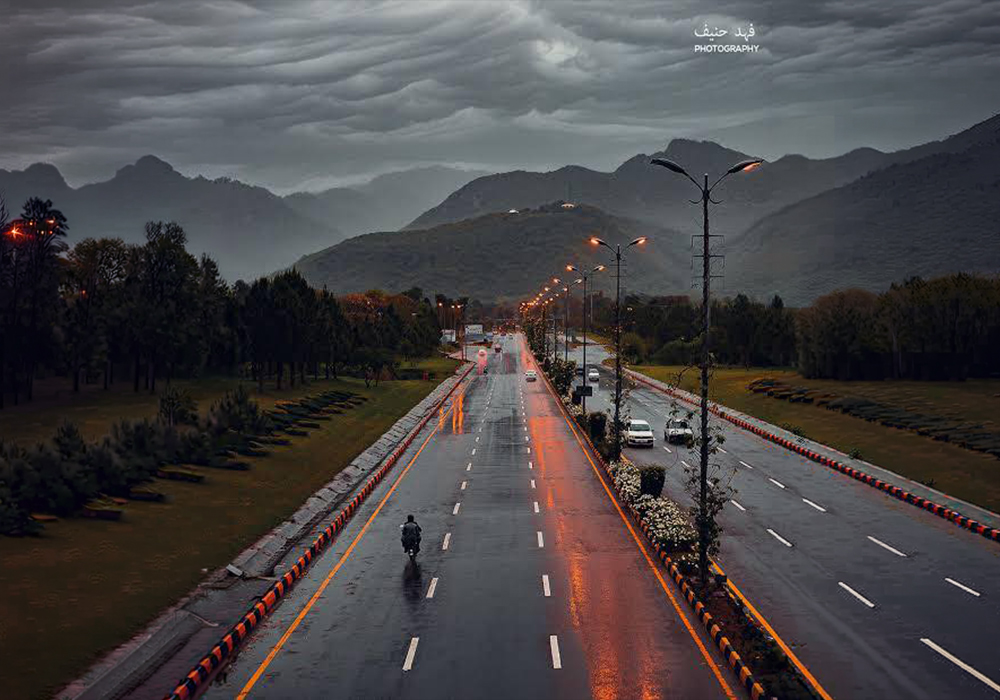
The Rain
I have no idea about the science behind climate change or the evolving topography of the region under discussion, but there were many rains in Islamabad in 1992. I used to carry a raincoat, and special arrangements for shoes were always in place to keep myself tidy for visits to clients’ offices. I remember winters more than summers—perhaps because on a bike, the latter was not as impactful.
The last episode ended at the house of dadi (grandmother) somewhere in F-6—I’m not sure whether it was F-6/1 or F-6/2—but rain was associated with it in some way. The family had two sons: the elder was in Class 7, and the younger in Class 4. Their parents were in the US, and the children were living with their grandmother and an uncle. The house was old and rustic, with classical woodwork, full of simplicity and elegance.
The grandmother was very literary and humble. Besides being the lady of that large house and managing everything (though I’m not entirely sure what “everything” entailed), she was the one who had employed me and was deeply concerned about her grandchildren’s studies.
I still remember the warm, cozy welcome she would give me, ordering tea and sitting with me for the first five minutes, asking about my well-being and engaging in polite conversation about the weather. Such gestures have remained in my memory.
She gifted me a raincoat—beige in colour, with big buttons—which I kept using for as long as I rode a bike. Some other jackets also stayed in my then-sensitive memory for quite a while. The fee they paid me was the highest I received at that time, and still, I feel I did not have strong command over the subjects I was teaching. The elder son was not interested in academic studies, and I believe eyes speak more than words.
Why the grandmother deserved such space in this episode—some reasons are already clear above, and some will emerge in later episodes, especially as I eventually migrated from Islamabad.
Since this is all about humans—especially when talking about work—you cannot skip the faces you have interacted with. Even the exchange of sincere smiles and shared energies is worth noting.
The uncle, who appeared to be the only male guardian of the children, was slightly chubby in appearance and carried a benevolent, warm smile. To me, he seemed like someone at peace with himself. He always treated me with grace.
The trees visible from their windows during rainfall seemed to narrate different kinds of stories—perhaps I was too young to fully comprehend them. People in certain sectors of Islamabad appeared somewhat aristocratic, or perhaps were meant to be so. I’m not sure about today, though economic class divisions never really end. Yet this family felt like old souls from a haveli in old Lahore.
My mainstream work was advertising, and as months passed at Orient Advertising, I became familiar with making print ads of all sizes, usually meant to be published in newspapers the next day. This was routine daily business. Text-based ads were prepared through printouts from printers, cut and pasted onto card sheets, with captions added separately. The artwork was then sent to newspapers for production and printing. InPage software and calligraphy were extensively used for Urdu ads. There was a photo lab in the basement where black-and-white photographs were developed daily.
Clients such as the Army, Navy, Air Force, Health Ministry, and many others were on board. Being the junior-most client executive, I still got the opportunity to interact—at a preliminary level—with clients handled by senior managers.
In my initial months, my duty was simply to say “Yes, sir” to everyone.
Yes, sir—may seem like surrendering one’s will, but that surrender shapes the coming freedom, which itself often remains a delusion…